
The Crane
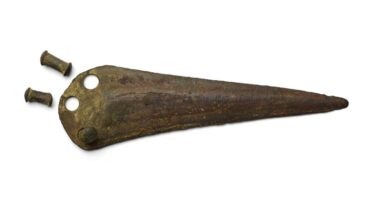
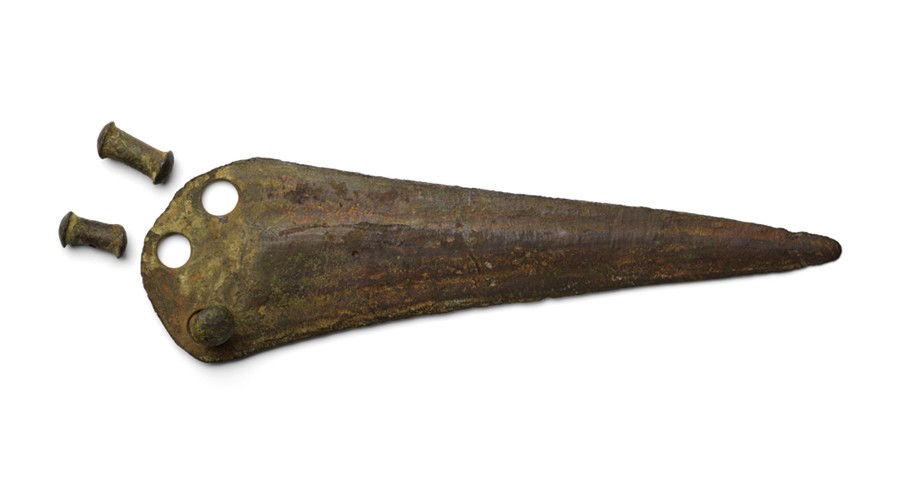
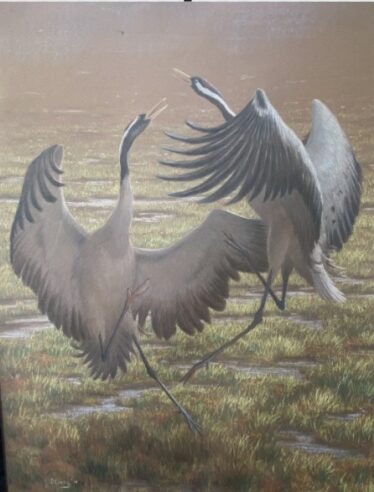
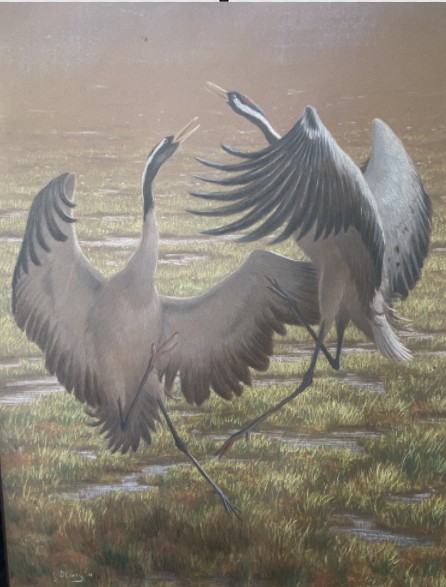
We have researched our community’s connections to the crane as part of “Our Irish Natural History,” a collaborative project with the National Museum of Ireland. Our research will go on display in an exhibition at the Dead Zoo Lab in Collins Barracks this Autumn. Working with Galway Community Archaeology Project we explore its link to a bronze age artefact – the halberd.
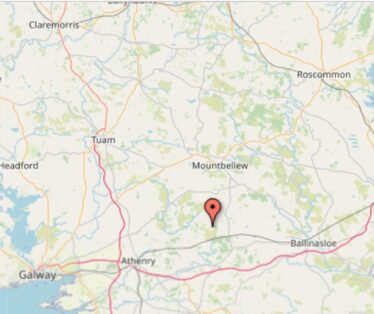
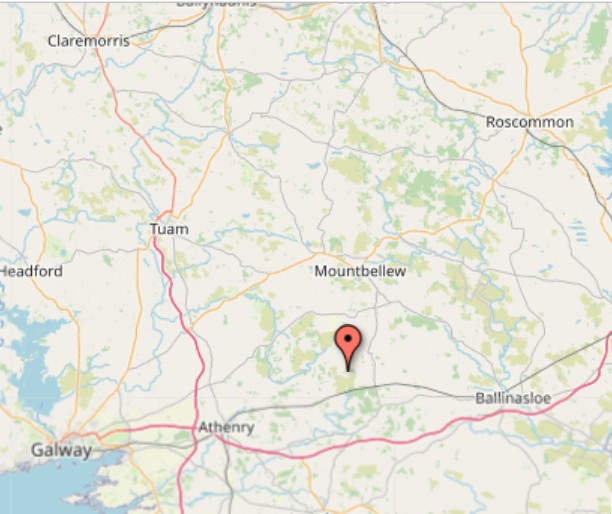
Corskeagh Townland
The crane would have been a very common sight in the Woodlawn area. The Gaelic an gCorr refers to the ‘Korrrrr’ sound or cry the bird made. This may be represented in the townland name of Corskeagh, north west of Woodlawn. The Crane disappeared from the Irish landscape over three hundred years ago, however, the Common Crane (Grus grus) has made a come-back to the midlands, with reports of a pair nesting on restored bogs in County Offaly for the past seven years (Bord na Móna, 2024). Today, its cousin the heron can be seen in the bogs and along the rivers of East Galway. It is hoped the Crane will continue to thrive in the midlands and we will see it again soon in County Galway.
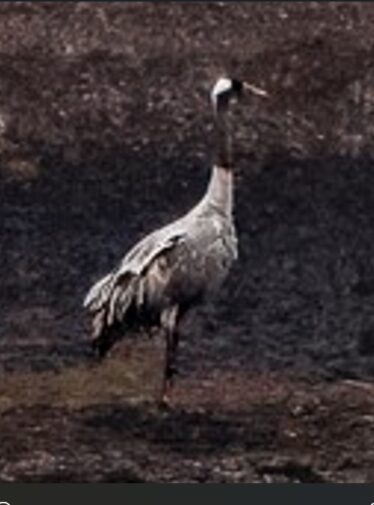
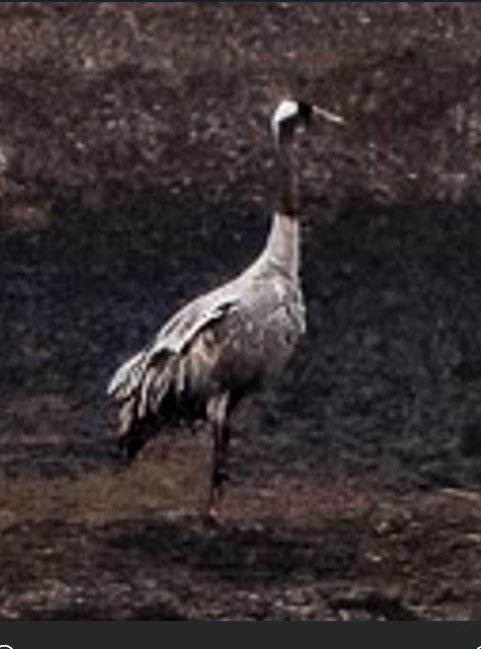
The Common Crane
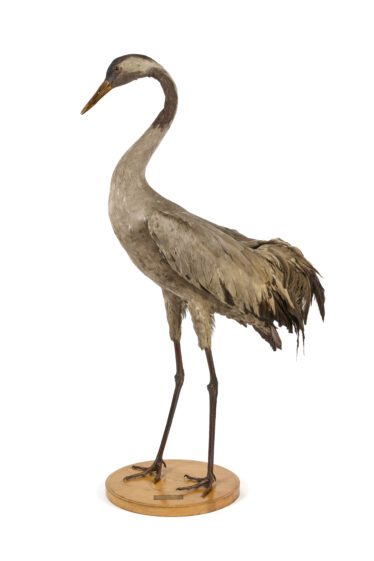
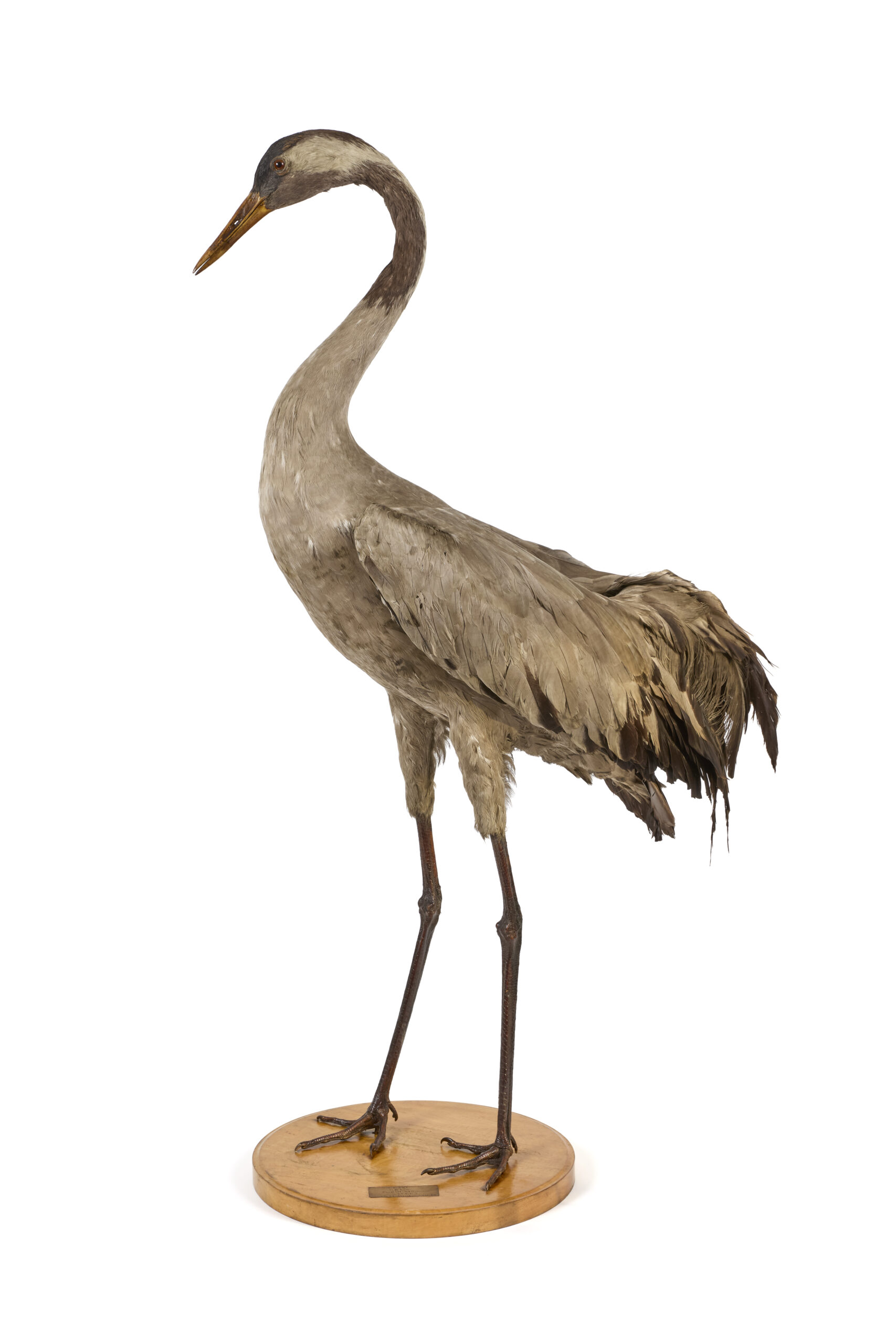
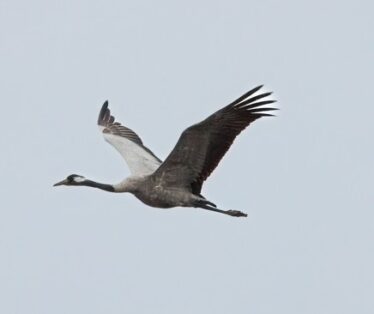
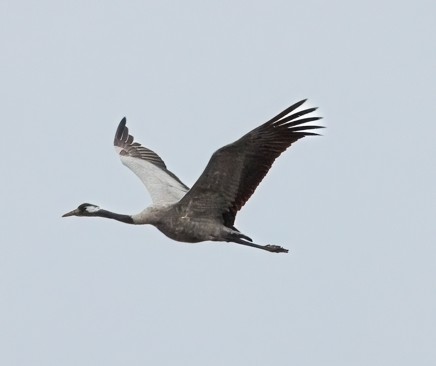
The Common Crane (Grus grus) is a huge, iconic and unmistakable bird, standing at 1.2m tall with a long neck, long legs, dagger-like beak, bluish-grey plumage and a noticeable red, black and white head marking. The species breeds across Northern Europe in bogs, lake reedbeds or forested areas along rivers, migrating to Southern Europe and Africa during the winter.
Relationship between The Crane and Grey Heron
Many people in Ireland mistakenly confuse the Grey Heron (Ardea cinerea) with a ‘Crane’; however, this species is only distantly related to the Common Crane. The Crane is actually more closely related to rails and crakes such as the Moorhen (Gallinula chloropus) or the Corncrake (Crex crex). Although Cranes and Herons are both typically greyish in colour, the Crane’s distinctive black and white head, red crown and plume of feathers at its rear end are usually enough to distinguish the two. In flight, the Crane flies distinctively with its neck elongated, while Herons often tuck their neck back in an ‘s’ shape.
Bronze Age Halberd Finds
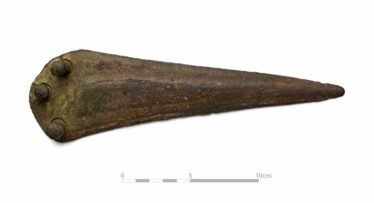
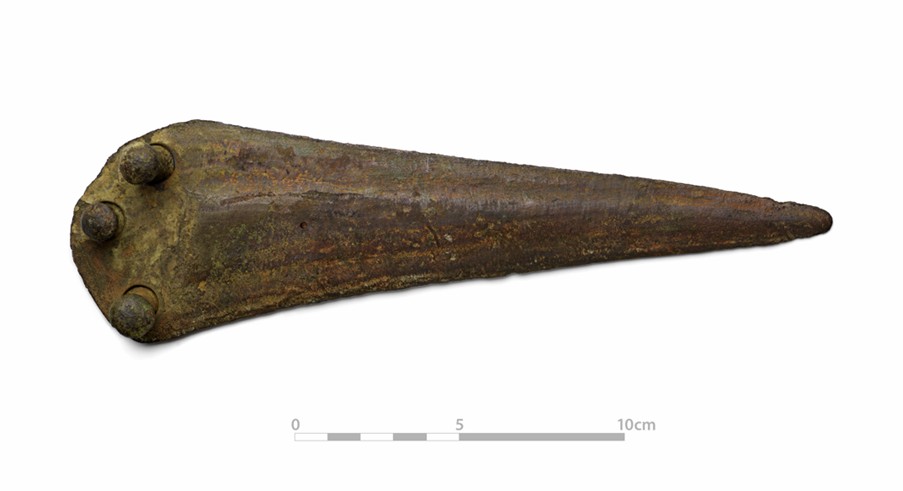
Stray archaeological finds in the area include a number of halberds. A halberd is a broad shaped blade with a strong mid-rib which has been described as resembling the beak of a crane. It would have been mounted onto a wooden shaft at a right angle. It was invented in order to shield more effectively than could be done with a spear. The Cloonymorris halberd is classified as an O’Riordain, Type 5.
Votive Offerings
A vast quantity of Bronze Age weapons have been found in wetland areas, lakes and shorelines throughout the country. Hoards of copper, bronze and gold have been found in bogs, lakes and rivers, some of which may have been part of votive offerings to the Gods, and some may be assemblages for re-use.
Halberd Assemblage near Kilconnell
To date, thirteen halberds are recorded to have been found in the County of Galway, ten of which were found in the Woodlawn area. Nine were found during the construction of the railway 1850, near Hillswood, Kilconnell. Seven of these were found together, in an assemblage, which may indicate they were part of a votive offering. They were all found pointing down in the bog. (Topographical Files, National Museum of Ireland)
Rituals Mimic The Crane
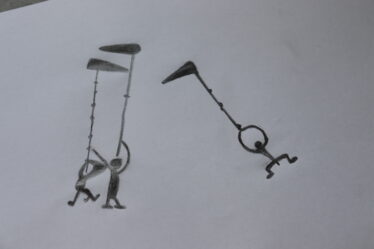
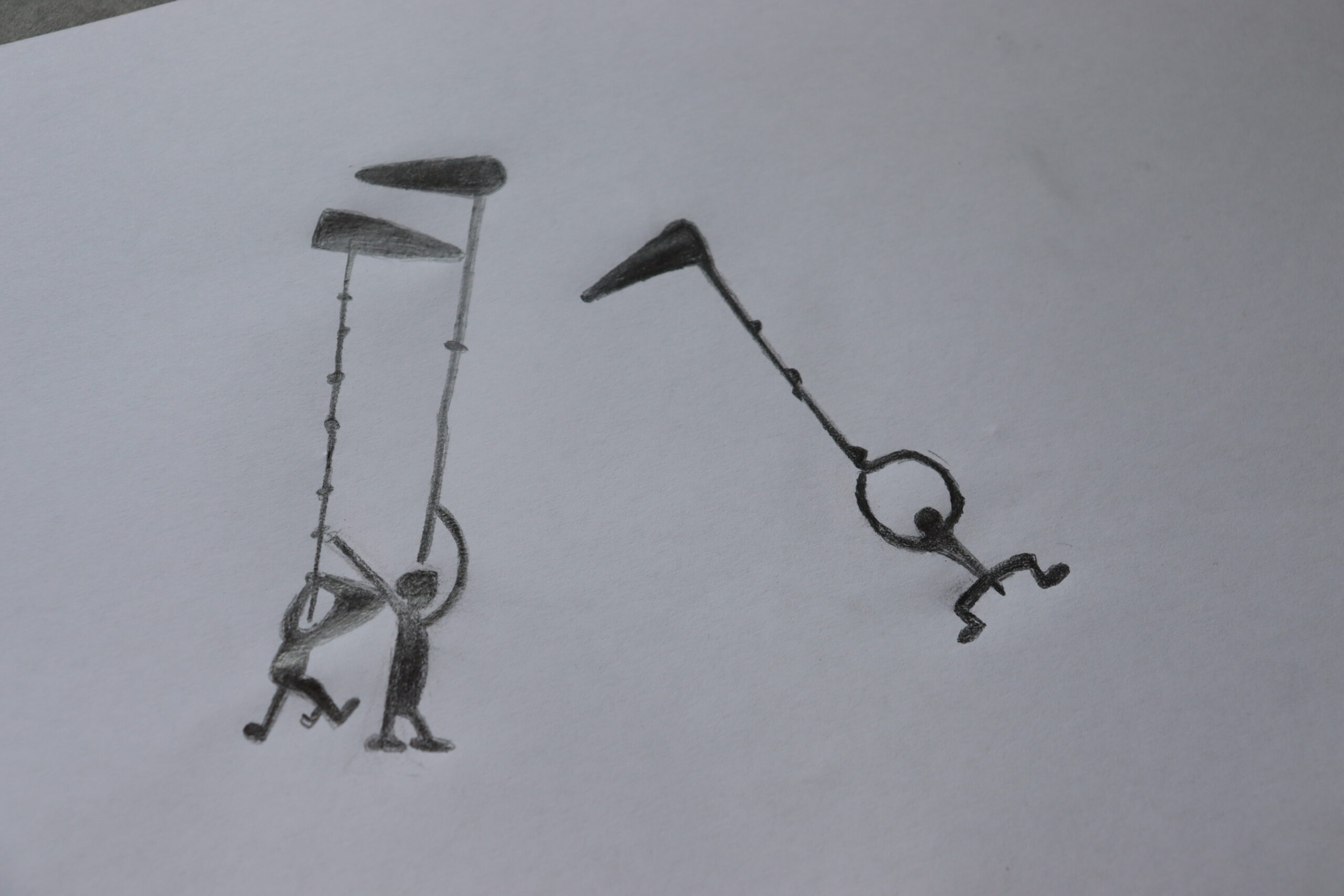
There are references to the possibility that the halberd may have been used in ritualistic dancing. Rock carvings in Sweden and Northern Italy have reproduced the image of the halberd, showing its popularity throughout the continent. One such carving at Mont Bego, Italy, shows a number of people holding halberds in what appears to be a ritualised fight or dance. These drawings show the halberd looking remarkably like the beak, head and neck of the crane. This is not at all surprising, as the crane has been associated with Irish mythology, druids and royalty throughout the ages. It was deemed a sin to eat the flesh of the crane. It was also common to keep a crane as a pet in medieval times to promote good fortune.
Fionn Mac Cumhaill
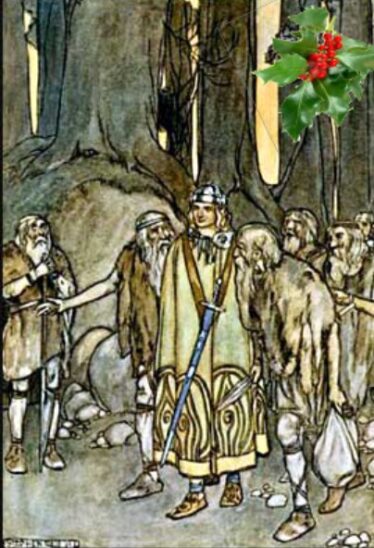
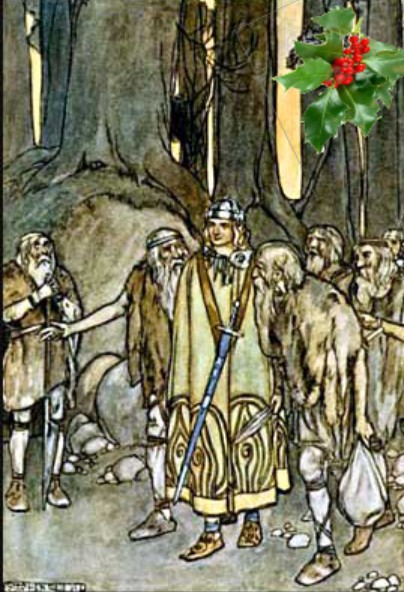
The Crane has a strong cultural presence appearing in folklore tales. Aoife, the daughter of Delbáeth fell in love with Ilbreac. Luchra, her rival turned Aoife into a great crane bird, forbidding her to land for 200 years. When Aoife finally died, a fine bag was made by Manannán himself from the skin of this crane. Manannán filled it with his most magical treasures.
Years later Fionn MacCumhaill came across the crane bag again after the man who had slain his father was killed. You can read this story at the following link https://storyarchaeology.com/the-treasure-bag-of-the-fianna/
Crane Motif in Archaeology
The Crane appears in the Book of Kells (c. 800 AD) and in drawings in the original manuscript of Topographica Hiberniae (1200 AD). The Crane has also featured as a visual motif in many archaeological artefacts, such as a 10thcentury Viking coin excavated from Wood Quay, Co. Dublin and a floor tile from Melifont Abbey, Co. Louth, possibly dating to the 13th century (D’Arcy, 1999). Carvings on crosses and other masonry may depict this majestical bird, its long beak and elongated neck interwoven with other iconography.
Meelick Crane
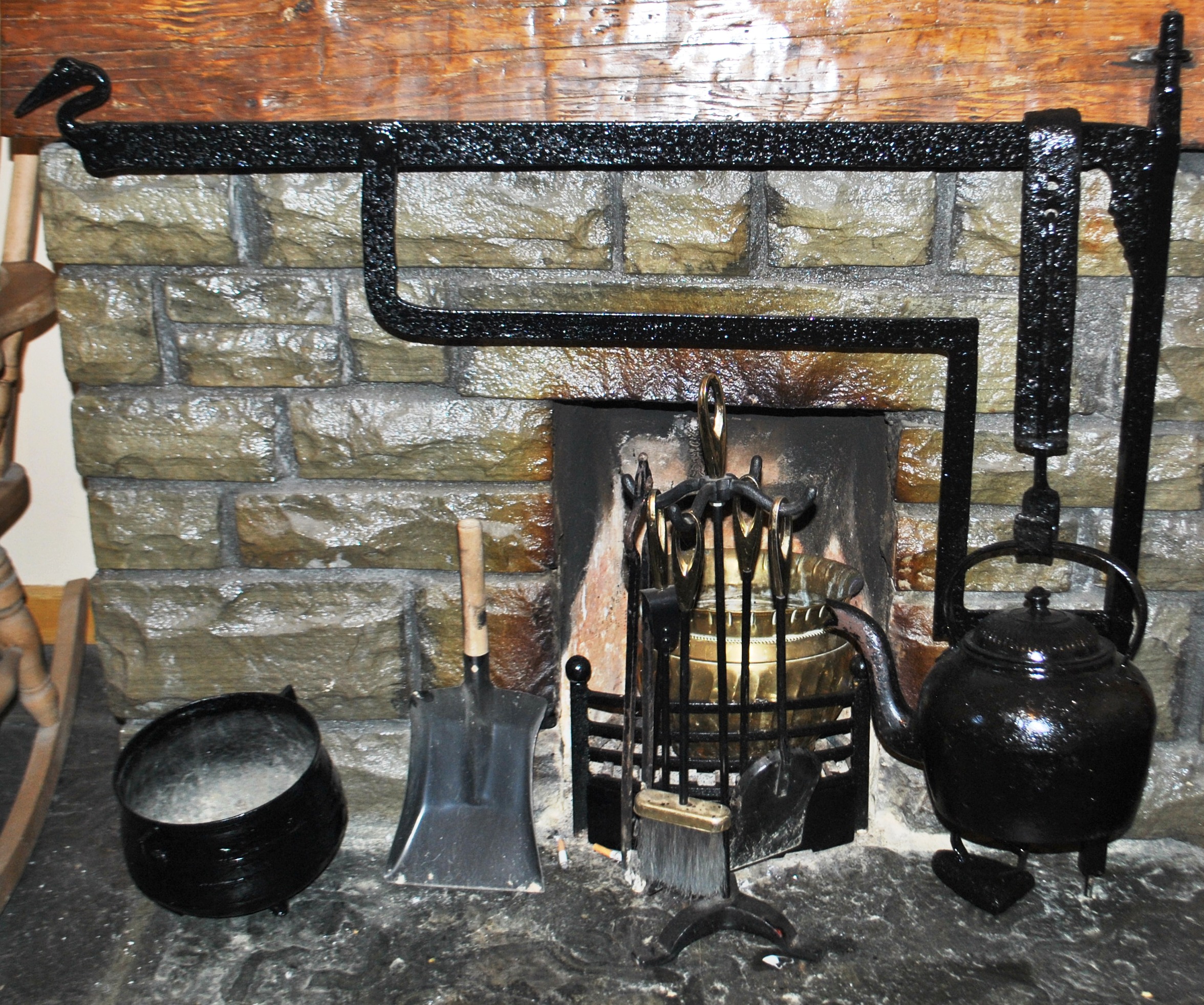
A more recent depiction of the Crane is shown on iron workings overhanging a fire in Meelick, Co. Galway. This amazing crane is decorated with a crane head. It was made by the Staunton blacksmiths of Balyhue, Eyrecourt. This is a fine example showing off the skill of the master smith. Thanks to Jim Bermingham for his permission to photograph this wonderful piece of vernacular folk art captured by Dr. Christy Cunniffe.
Shawn Dowdall
Shawn Dowdall is an ornithologist with Galway-based environmental consultancy MKO. As an environmental consultant, Shawn carries out important ornithology surveys which contribute towards Environmental Impact Assessments, to ensure that there are no significant impacts to bird populations as a result of development. He has a strong interest in Ireland’s wildlife and natural history, particularly Ireland’s constantly evolving birdlife. Shawn has also volunteered with Birdwatch Ireland, in ongoing monitoring of seabird populations, and the Golden Eagle Trust, surveying Red Kites and Hen Harrier, contributing to work that will hopefully ensure that these species don’t face the same fate that the Common Crane did 300 years ago.
Bernie Doherty is Galway County Community Archaeologist and a member of Woodlawn Heritage Group.
Dr. Christy Cunniffe is the retired Galway County Community Archaeologist.
References:
‘Cranes return to Bord na Mona bogs for another breeding season’ Accessed May 2025
Ronan O’Flaherty (2011) ‘Ceremonial or deadly serious? Function of Irish Early Bronze Age Halberds’ https://www.academia.edu/1640588/Ceremonial_or_deadly_serious_Function_of_Irish_EBA_halberds?email_work_card=view-paper
O’Toole, Lorcán, and Ronan O’Flaherty. “‘Out of Sight, out of Mind?’ On the Trail of a Forgotten Irish Bird.” Archaeology Ireland, vol. 25, no. 1, 2011, pp. 13–16. JSTOR, http://www.jstor.org/stable/41206309. Accessed 6 May 2025.
O’Flaherty, Ronan. “The Early Bronze Age Halberd: A History of Research and a Brief Guide to the Sources.” The Journal of the Royal Society of Antiquaries of Ireland, vol. 128, 1998, pp. 74–94. JSTOR, http://www.jstor.org/stable/25549844. Accessed 6 May 2025.
Doherty, B. & Dowdall, S. (2025) The Crane as a Bronze Age Icon via Galway Community Archaeology Website
No Comments
Add a comment about this page